

Robotize
Robotize supplies mobile robots for repetitive internal transport, line feeding and pallet transfer in environments where operational simplicity, safety and efficiency in constrained spaces matter decisively.
The GoPal® range addresses projects where aisles are narrow, the flow is repetitive and predictable, and the solution has to fit the existing layout without major infrastructure changes.
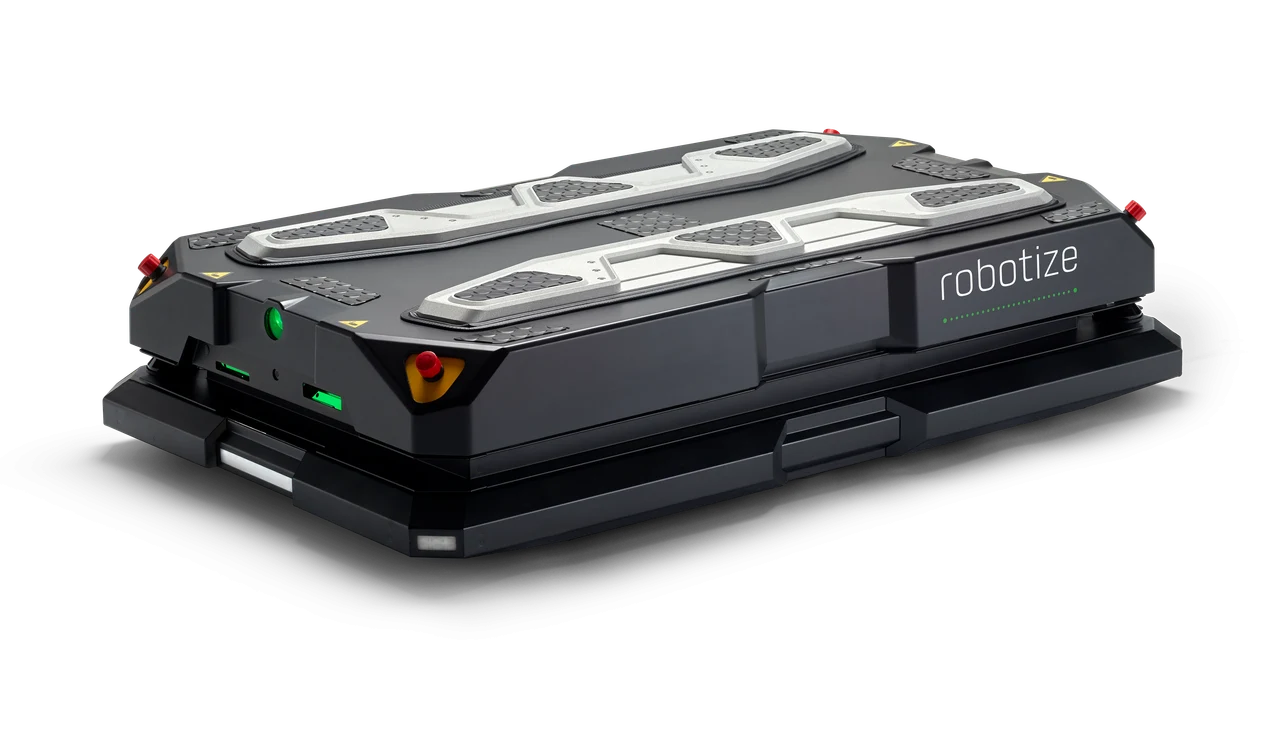
Who Robotize is, and where it excels
Robotize is a Danish manufacturer of autonomous mobile robots (AMR) specialised in internal pallet transport. The GoPal® range is built around repetitive transfer, end-of-line collection and operation in narrow aisles. In the Novomatix portfolio, Robotize is the reference solution for projects where the compactness of the robot and the simplicity of integration matter as much as transport performance.
The E22, E24 and E24W models are designed primarily for collecting pallets at the end of the line and moving them internally in warehousing or production — the principal application of the range.
Where aisle width does not allow fork-type solutions or larger AGVs, Robotize becomes the more practical operational choice. It adapts to the existing layout without major redesign.
The Robotize range has detection and stopping systems appropriate to operation in mixed environments, where both equipment and people move. A concrete advantage for adoption and operational validation.
Main Robotize models
The GoPal® range covers platform transfer, end-of-line collection and internal pallet transport across different load and footprint configurations. Below is an overview of the models and the applications each one suits.
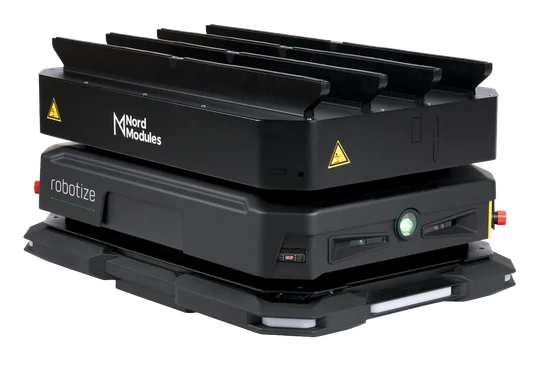
A platform with technical modules and dedicated interfaces for transporting KLT containers and half-Euro pallets
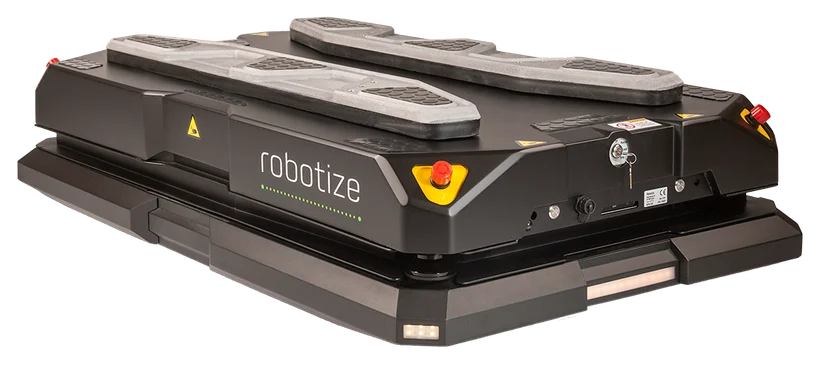
The entry point into the E range for end-of-line pallet collection and internal transfer, suited to flows with loads up to 500 kg and compact aisles
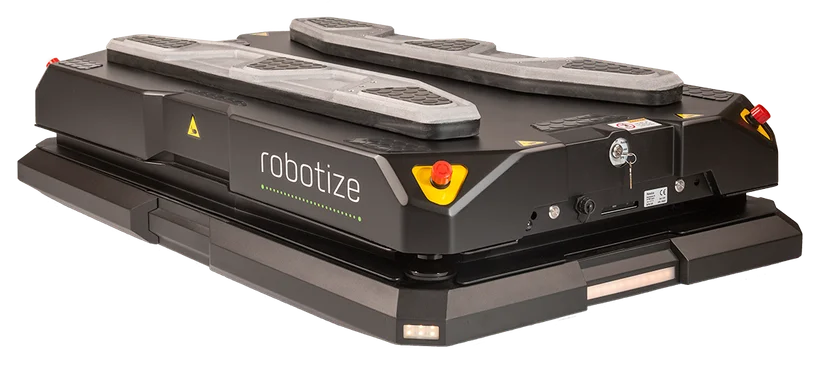
Twice the capacity of the E22, suited to end-of-line collection and internal transfer with standard pallets up to 1,000 kg in higher-tempo flows
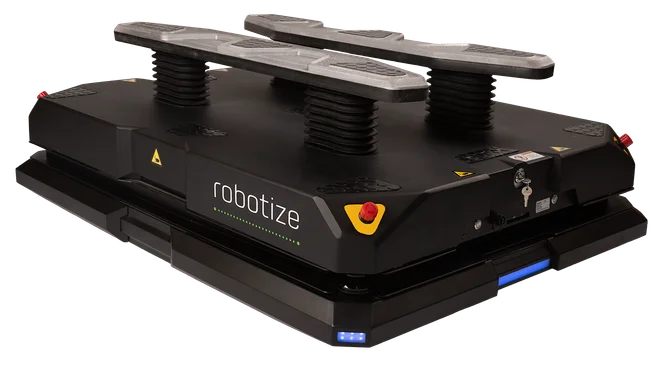
A configuration specialised for industrial pallets that also offers the flexibility to carry Euro pallets using the same accessories.
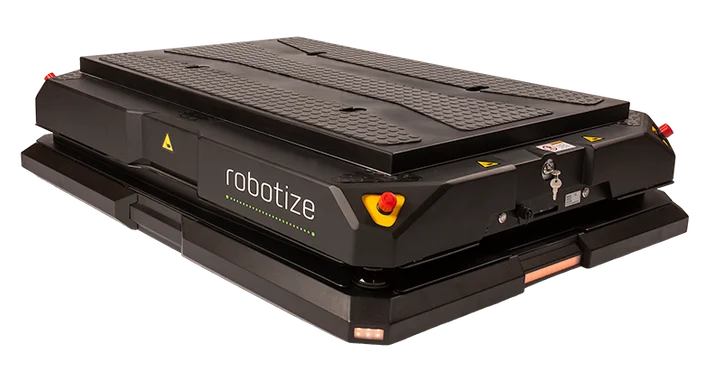
Suited to collecting "closed at the end" pallets. The standard lifting system (pads) is replaced by a platform that allows this pallet type to be transferred.
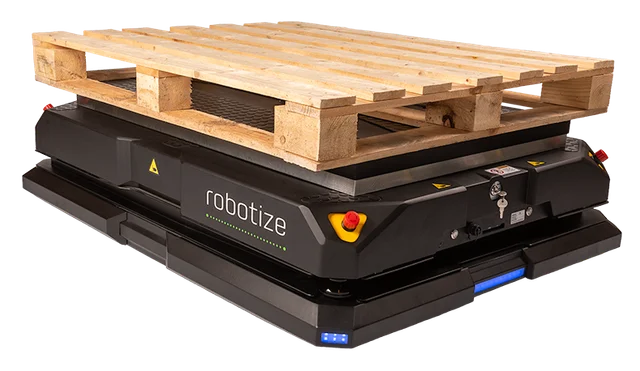
Suited to collecting "closed at the end" pallets. The standard lifting system (pads) is replaced by a platform that allows this pallet type to be transferred.
Where Robotize GoPal® AMR makes sense
The GoPal® AMR works best in repetitive, well-defined flows where the route, the load and the transfer points are stable. The applications below represent the main operationally validated scenarios.
Finished goods end-of-line
Automatic collection of pallets at the end of the line and transport to dispatch, buffer or warehouse. The principal application for E22, E24 and E24W.
Repetitive internal transfer
Movement of pallets or containers between two fixed points in warehousing or production, with no fixed infrastructure along the route, at a high and predictable tempo.
Line feeding
Feeding production lines with materials or semi-finished goods. Particularly relevant for the GoPal® P35 and for configurations with dedicated top modules.
Transfer between defined stations
Movement between standardised drop-off and pickup stations in production or intralogistics flows, where the interface points are clearly defined and repetitive.
Internal production intralogistics
Connecting receiving, buffer, production and dispatch areas into a smoother internal flow, without needing wide aisles or special infrastructure.
Predictable, well-defined flows
Robotize works well in operations with a steady tempo and repetitive routes, where simplicity of the solution and operational reliability are the priorities.
GoPal® AMR applications are found in industries with a repetitive tempo and stable flows. Relevant industries.
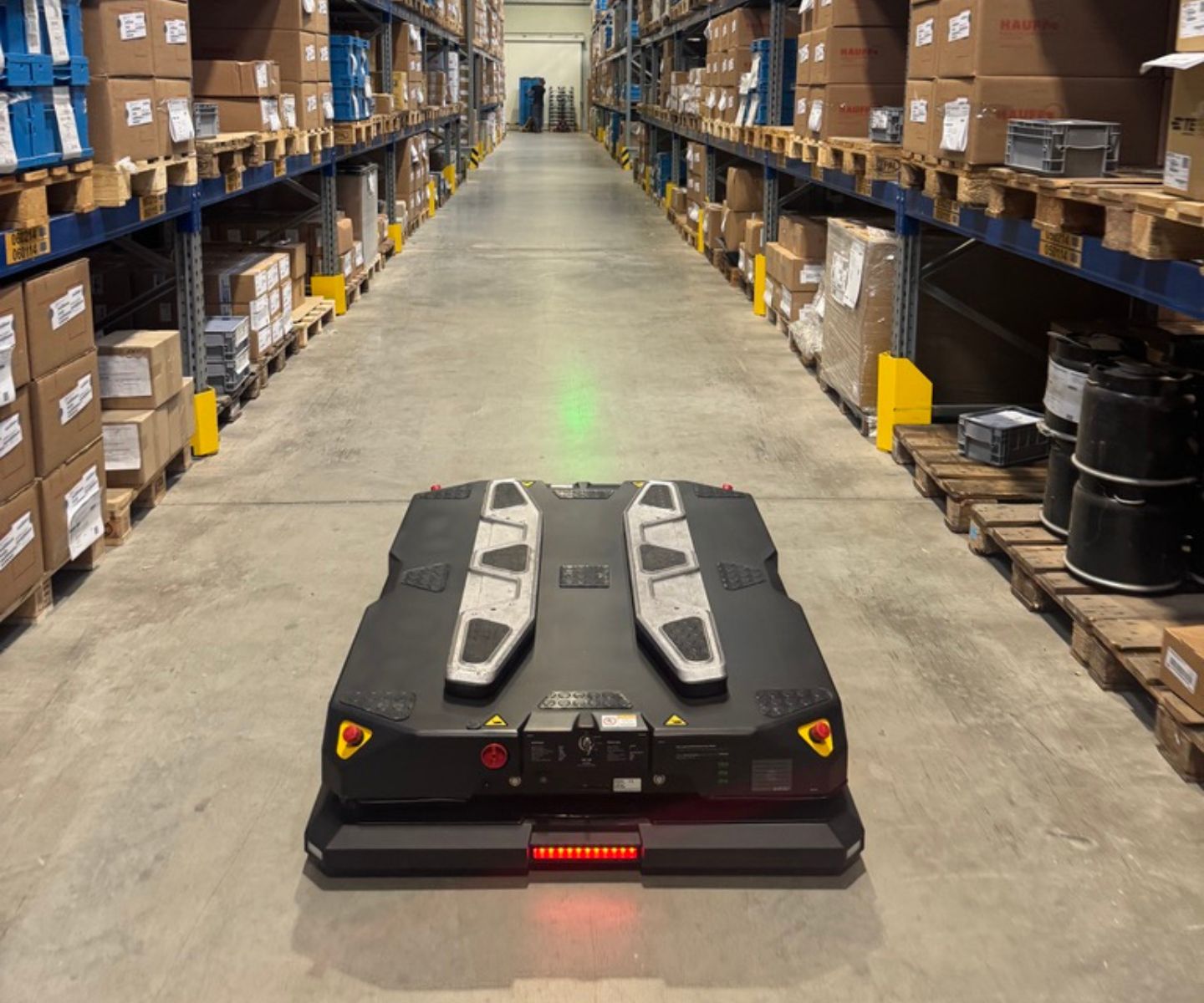
The GoPal® AMR advantage in narrow aisles
In practice, many production and warehousing facilities have aisles that rule out larger builds. The GoPal® AMR stays relevant precisely because of its compact footprint, its high-performance navigation system and how easily it integrates into the existing layout.
The 360° mechanical bumper allows the GoPal® to pass through very narrow spaces where comparable robots do not fit. It works in aisles where larger solutions are impractical, without requiring major changes to the existing layout.
The advantage is not only dimensional. The navigation system allows precise, adaptable operation, including in more complex layouts.
It adapts more easily to the existing flow and layout, reducing the need for major infrastructure work and speeding up operational adoption.
The GoPal® reaches up to 2.4 m/s (8.6 km/h) and stays productive both in narrow aisles and on longer routes or in more open spaces. Compactness and travel speed coexist, which makes it relevant to a wider range of applications than strictly constrained spaces.
Safety and operation in mixed environments
Safety is a central part of how the Robotize platform is designed, from the 360° mechanical bumper on the GoPal® range to the detection and stopping systems. That matters in facilities where robots move through spaces shared with operators — in practice, the safety level of a mobile robot directly influences how easily it can be integrated and validated in the operational process.
Detection and controlled stopping
Perimeter detection and emergency stop systems in line with the requirements for operating in areas with human traffic. Predictable, controlled behaviour in any situation.
Operation in mixed environments
Designed for scenarios in which robots and people share the same operational space. Traffic rules and safety zones are defined together with Novomatix during the integration phase.
Confidence and operational adoption
A high level of safety reduces resistance to adoption and simplifies validation with HSE and operations teams. In practice, it shortens the path from pilot to stable production.
Accessories and interfaces that complete the solution
The GoPal® robot is not in itself the complete Robotize solution. Transfer stations, top modules and interfaces with conveyors or dedicated stations are the components that adapt the system to the reality of the pickup and drop-off points in the customer's process.
Transfer stations
Standardised drop-off and pickup points, sized for the chosen robot and adapted to the load format and the operational tempo. Defined together with Novomatix during the design phase.
Top modules
Upper modules that extend the platform's capabilities for specific line-feeding applications or transfers requiring precise positioning. Particularly relevant for the GoPal® P35.
Interfaces with existing infrastructure
Connections to conveyors, workstations or charging points, defined according to the operational process and the load footprint. Adapted to what already exists in the plant or warehouse.
Configuration matched to the application
Accessory selection is part of designing the solution, not a separate decision. Novomatix defines the correct configuration according to the flow, the load and the transfer interface.
From robot to operational flow
Novomatix turns the robot into a complete operational solution, defined according to the flow, the transfer points, route validation and correct integration into the customer's process.
- Integration into the customer's real flow, not into laboratory conditions
- Operational validation of the routes and of robot behaviour in production
- Correct design of the transfer points according to format and tempo
Flow analysis and solution selection
We check aisle width, pallet format, transfer distances and the logic of the pickup and drop-off points, to establish whether GoPal is suitable and in which configuration.
Defining the transfer points
We design the stations and interfaces so that the robot picks up and drops off the load correctly, in a way compatible with the tempo and format of the customer's process.
Validation and commissioning
Every project is commissioned in the customer's real context, with validation of the routes, of behaviour in the flow and of the operational safety criteria.
Scaling and later expansion
We build projects with expansion in mind, so that a first use case can evolve in stages without a major redesign of the system.
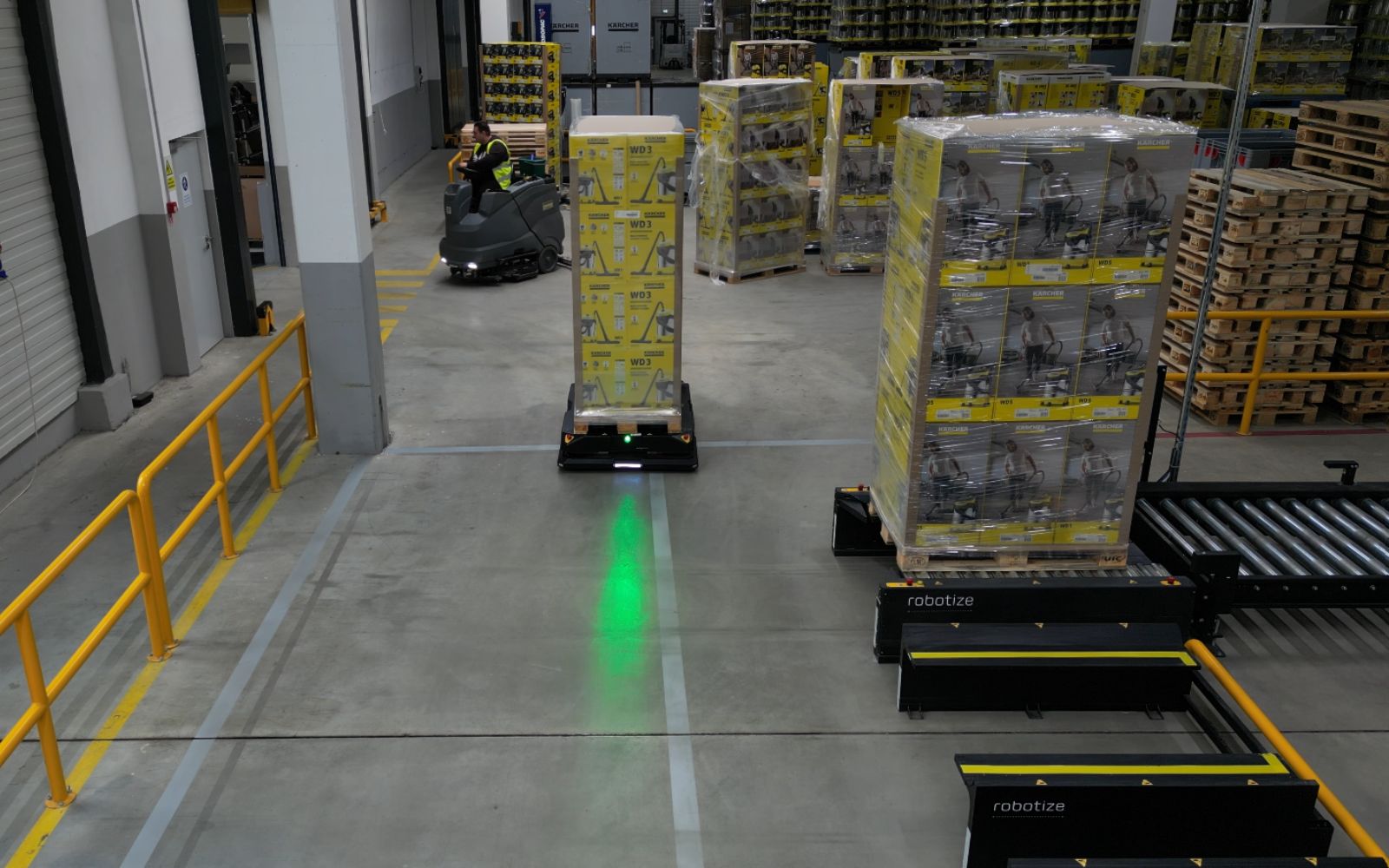
GoPal® in production: Kärcher, Schaeffler and Marquardt
GoPal® AMRs already run in three distinct industrial contexts in Romania, integrated by Novomatix into customers' real production and intralogistics flows.
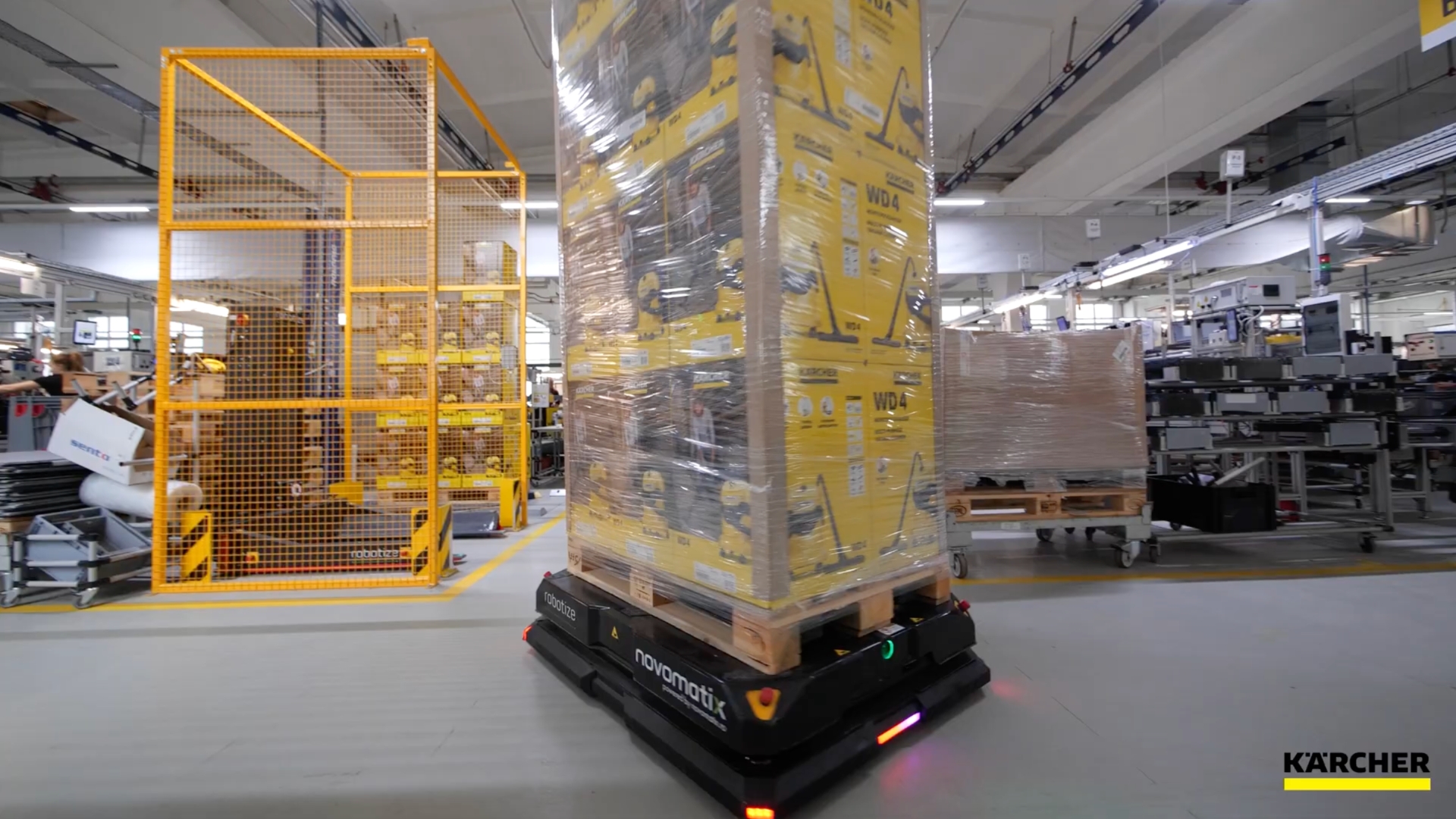
GoPal® E24W — automated pallet transport across three internal flows
AMRs integrated by Novomatix across finished goods, injection-moulded components and packaging materials, between the assembly lines and the warehouses.
Three internal logistics flows automated with the GoPal® E24W.
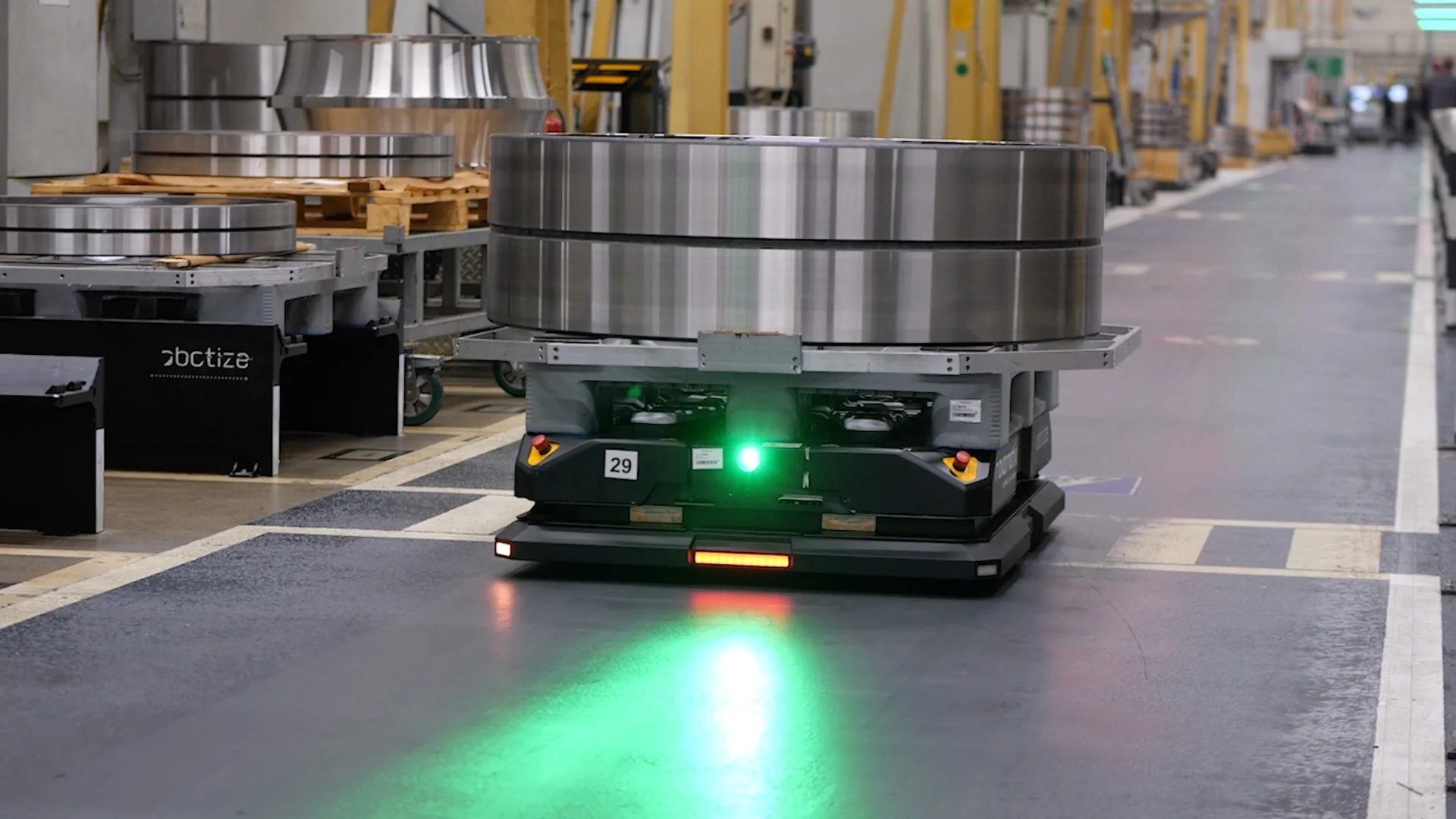
GoPal® E24 & E24W — a mixed fleet for JIT and end-of-line
AMRs integrated by Novomatix across several production halls for JIT line feeding with bearing rings and finished-goods collection.
A mixed fleet across several halls, with load carriers for special loads.
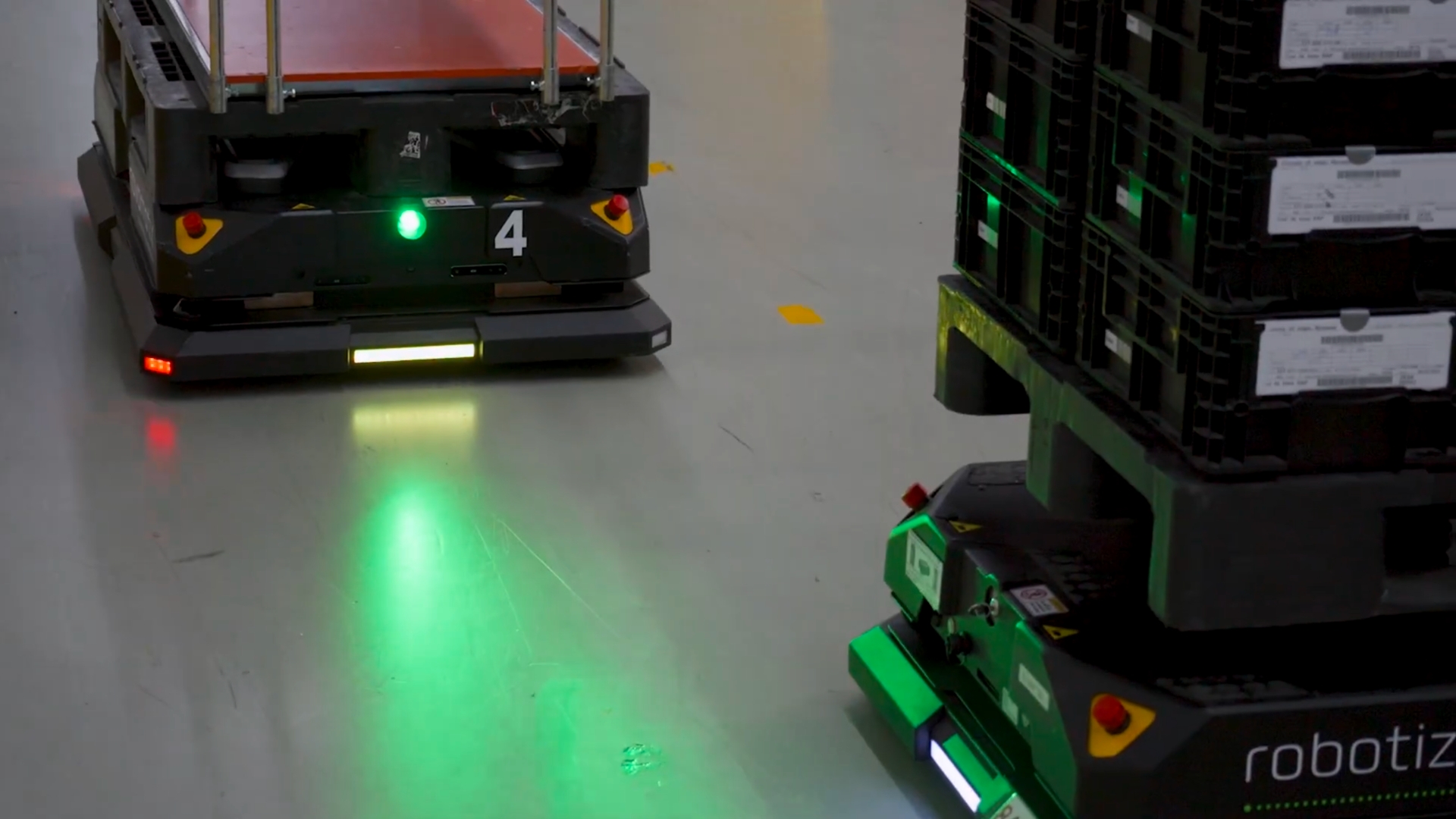
GoPal® E24 — internal intralogistics orchestrated across 52 routes
AMRs integrated by Novomatix at a 25,000 m² site and coordinated by GoControl FMS for put away, line feeding, empty packaging and finished goods.
52 routes and over 800 transport orders per day.
Operational support sustains long-term performance
In flows with automated pallet transport, operational continuity depends on well-structured interventions, planned maintenance and safety checks carried out properly. That is why AMR/AGV support should be treated as a natural part of the project, including in the context of Robotize solutions.
- Interventions and diagnostics for real-world operation
- Periodic checks and planned maintenance
- Support for continuity and expansion over time
Quick answers about the Robotize GoPal® AMR
Robotize becomes more relevant when the available space does not allow a fork-type robot, or where aisles are too narrow for comfortable manoeuvring. In addition, for finished-goods end-of-line flows or internal pallet transfer without lifting to height, Robotize is often simpler to integrate and to operate.
Repetitive, predictable flows: finished-goods end-of-line, internal transfer between fixed areas, and line feeding. Robotize works well where the route, the load and the transfer points are well defined and consistent.
Yes — this is one of the main advantages of the range. The compact footprint of the GoPal® E allows operation in aisles where larger solutions do not fit or cannot manoeuvre efficiently. That makes it relevant to a significant share of existing production and warehousing facilities.
It means detection and stopping systems appropriate to the requirements for operating in mixed areas, predictable behaviour in the presence of people, and easier validation by HSE and operations teams. In practice, a good safety profile shortens the path from pilot to stable production.
We start from the customer's real process: we analyse the flow, the load, the space and the transfer points. We define the correct configuration, design the stations and interfaces, commission the equipment in its real context, and build the project with later expansion in mind.
Want to find out whether Robotize fits your flow?
Tell us what the route, the load and the transfer points look like, and we will tell you whether Robotize is the right solution for your space and your operation.
Talk to a specialist