End-of-line in production
Production lines with a steady rhythm where manual palletizing costs time and introduces variability into the last step of the flow. Automation holds the rhythm and frees operators for higher-value work.


Stackbot is a complete automated palletizing system for end-of-line, integrated and implemented by Novomatix. Available in four versions (SB20 and SB30, CORE and PRO), it works Plug & Play and can be operational in approximately 60 minutes from delivery.
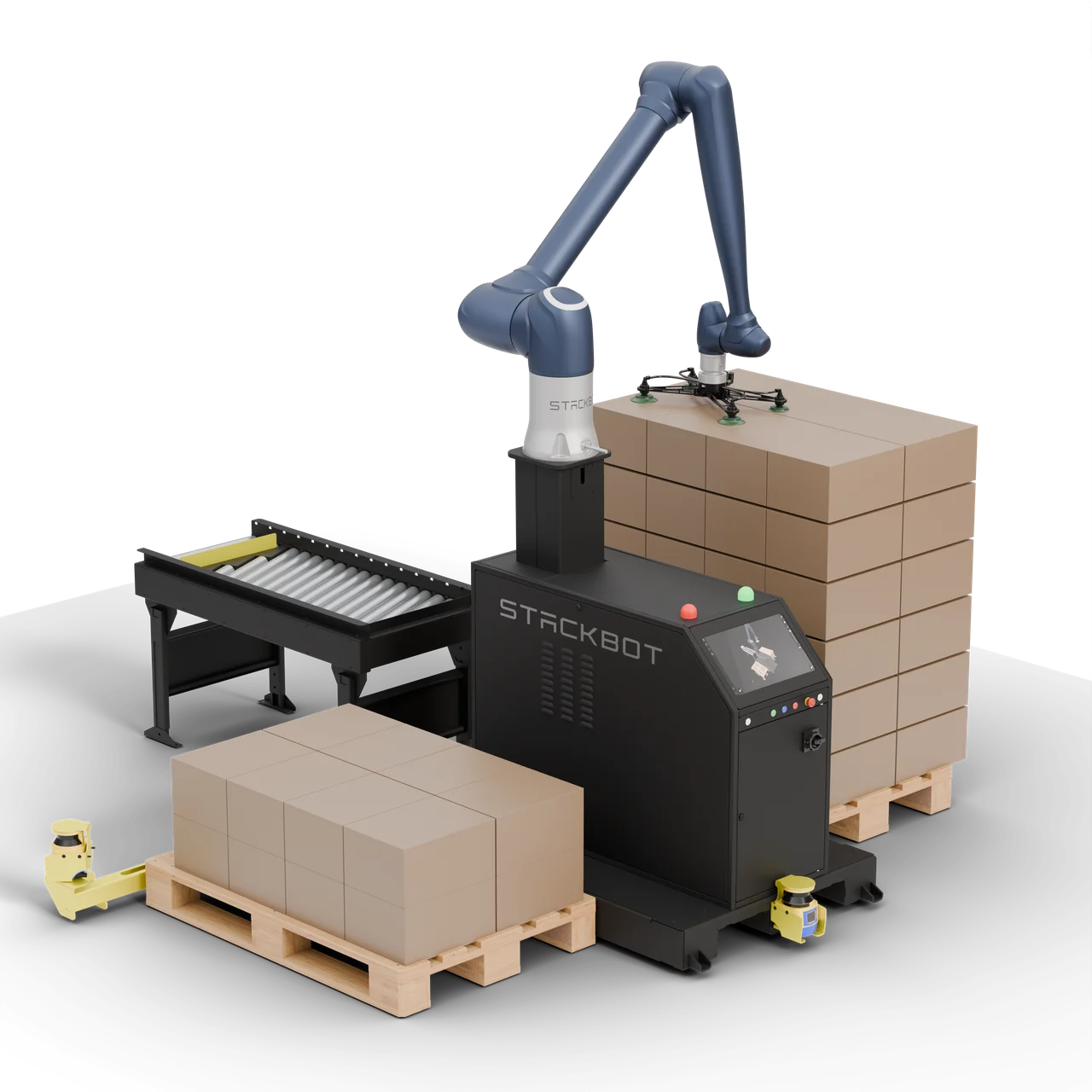
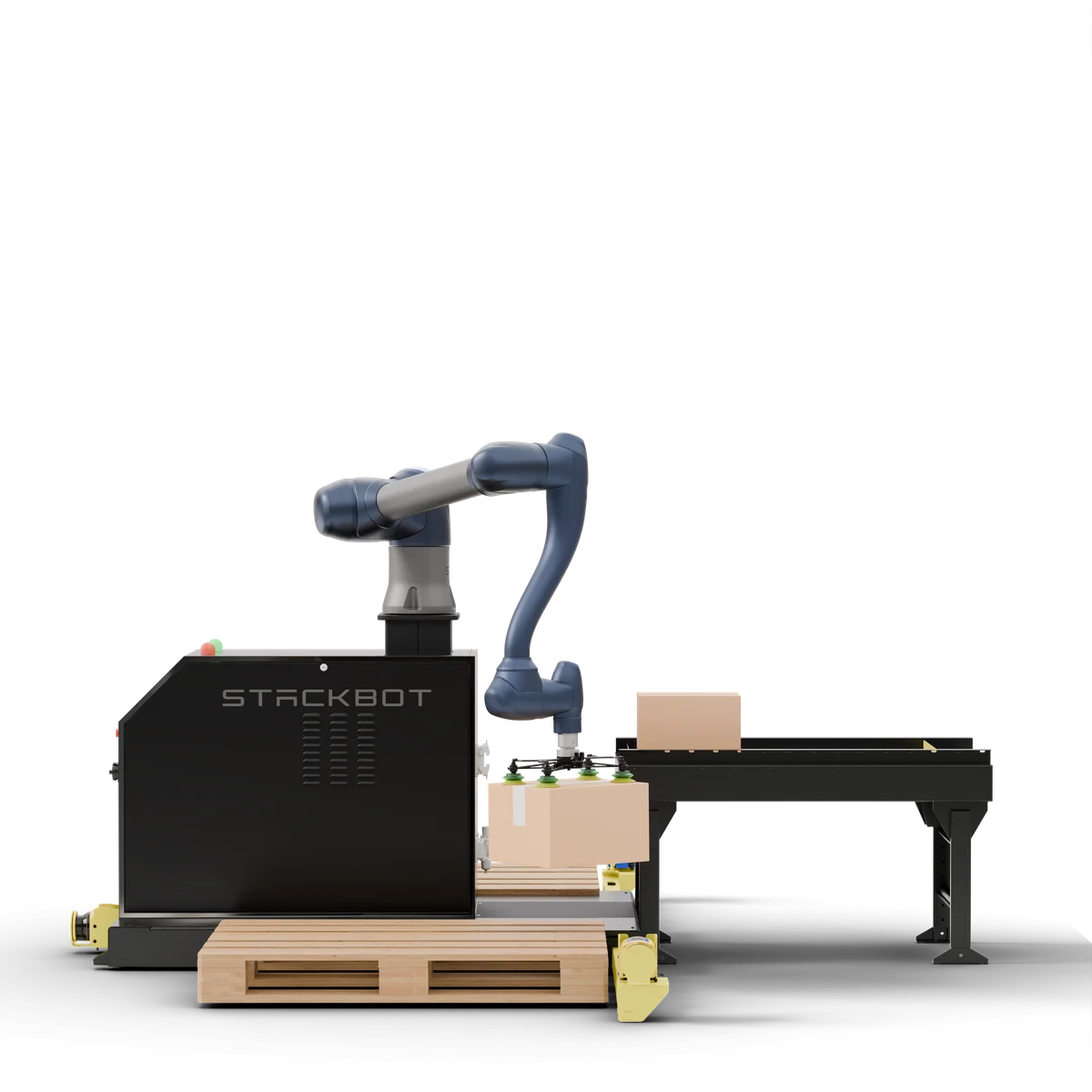
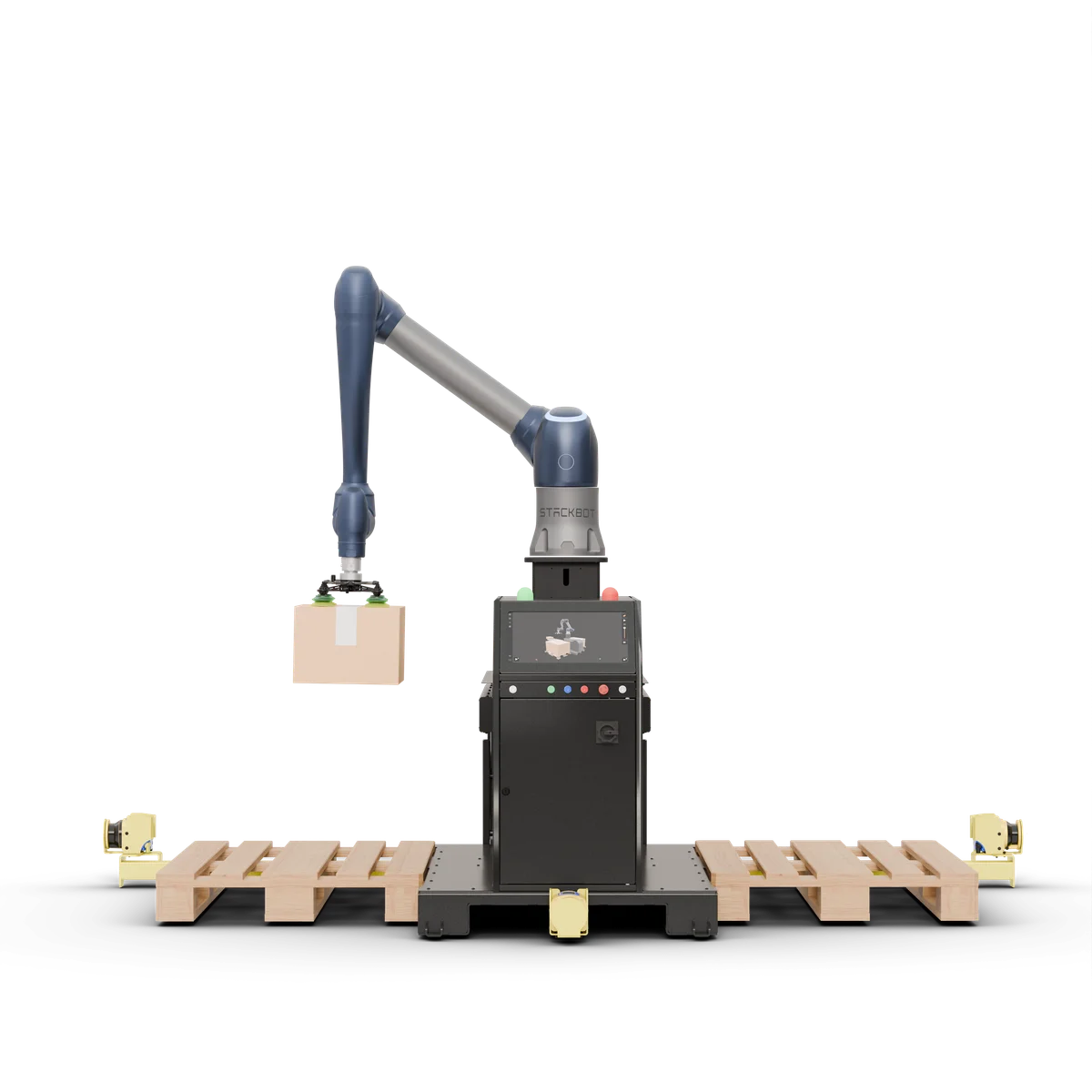
Stackbot is not a standalone robot arm but a complete automated palletizing system, designed for control, repeatability, and quick integration at the end of the line. It includes every component needed for stable, safe palletizing that is straightforward to configure in operation.
An inconsistent rhythm, dependent on operator availability and physical condition
Variability in how products are placed — unstable pallets and risk in transport
High physical effort and ergonomic risk in an area where injuries can occur
A bottleneck at end-of-line that caps the rhythm of the whole production
Difficulty scaling as volumes grow, without hiring additional staff
Stackbot removes or substantially reduces these constraints with an automated, mobile, easily configured system — without major changes to the line or to the process.
Removes the variation in rhythm that manual handling introduces. The flow at the end of the line becomes more predictable and easier to plan.
Controlled, repeatable placement — pallets that are more stable, safer, and simpler to handle in the warehouse or at dispatch.
Removes or substantially reduces a physically demanding task, with a direct effect on working conditions and on the risk of injury.
Mobile and Plug & Play — it fits onto existing or new lines without major changes to the flow or to the infrastructure.
The clearest gains come from removing manual effort at the end of the line, steadying the rhythm and reducing dependence on operator availability. In a repetitive process the return is calculated from the real process, utilization and volumes, not estimated.
The solution can be moved between lines and adapted as volumes or product types change, without replacing the whole system.
Situations where the flow, the volume, and the operational constraints make automating palletizing a clear decision.
Production lines with a steady rhythm where manual palletizing costs time and introduces variability into the last step of the flow. Automation holds the rhythm and frees operators for higher-value work.
Applications with regular volume where consistent placement on the pallet affects transport safety, stability, and alignment with the requirements of customers or distribution.
Repetitive operations with high ergonomic risk, where operators are assigned to a physically demanding, error-prone process. The business case here is usually the most straightforward to build.
Line extension or redesign projects where automated palletizing can be built in from the start, with an optimal layout and correctly sized flow logic.
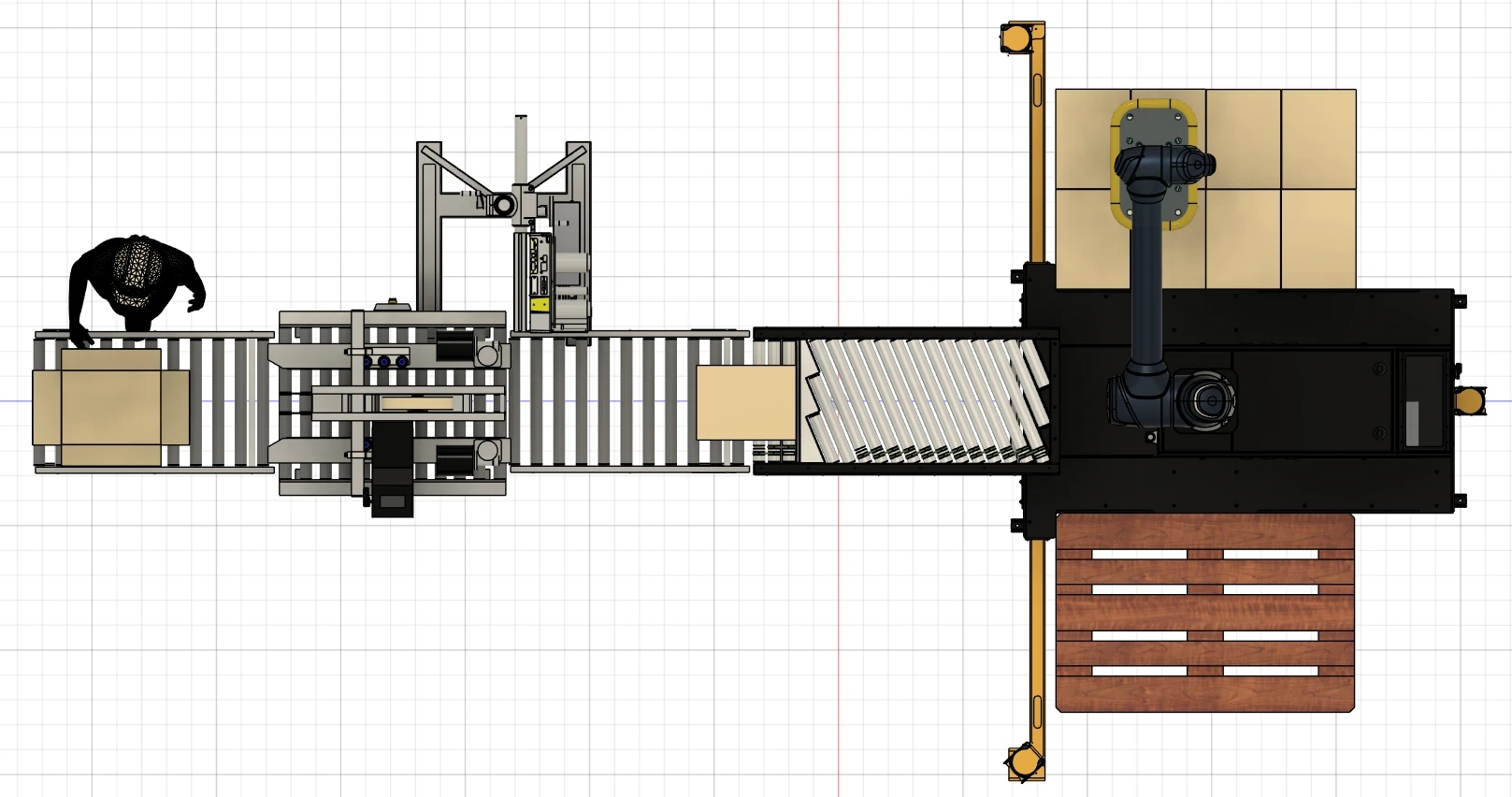
Stackbot can be integrated into compact palletizing cells, fed from a conveyor and with a dedicated pallet area, without restructuring the existing flow.
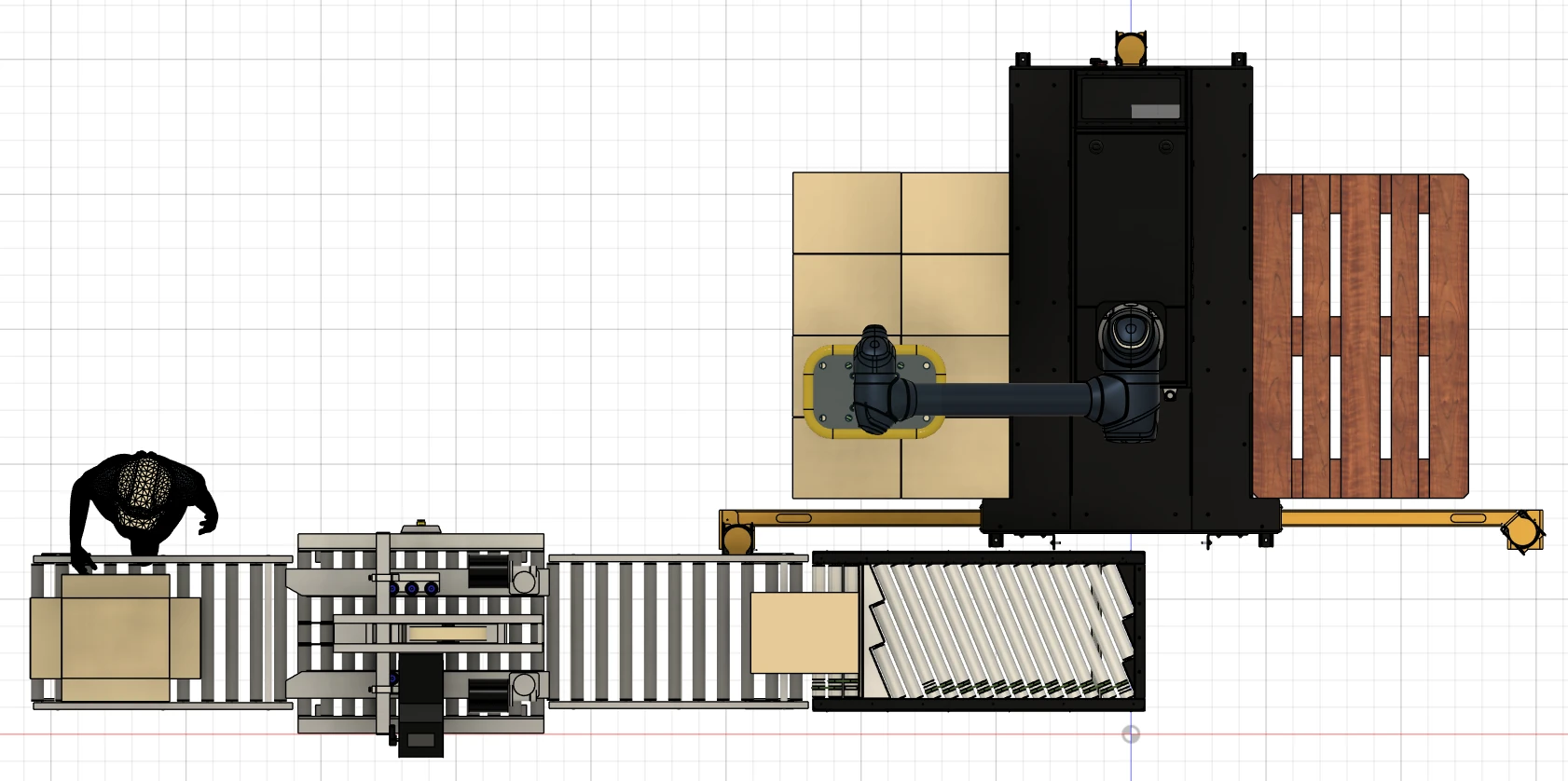
The choice is not made from a catalogue. Every application combines several factors that have to be assessed together, not in isolation.
Box, crate, container, shrink-wrapped pack — each one dictates how the product is picked, handled, and placed on the pallet.
The weight of the unit and of the complete pallet determines the type of robot and the structure of the gripper. Stackbot covers up to 20 or 30 kg per unit.
The number of layers and the maximum height influence the reach required and therefore the version of the system.
The number of units per minute dictates the palletizing capacity and any buffers or accumulation areas required.
The pallet scheme — the number of products per layer, their orientation, the interleaving — determines how complex the software and the operation become.
The footprint and the clear height at the end of the line define what physically fits: a compact system or a dedicated cell.
How products reach the station, and how the full pallet leaves the area, dictate the mechanical interfaces required.
The connection to conveyors, stretch wrapping, labelling, mobile robots, or tracking systems has to be considered from the selection stage.
Not every solution looks the same. The format depends on the application, the space, and the level of integration required.
Self-contained solutions positioned at the end of the line without infrastructure changes. They install quickly, can be moved between lines, and suit situations where flexibility and non-disruptive implementation matter. Stackbot belongs to this category.
Fixed configurations, designed as a permanent part of the line. Suited to high volumes, a steady rhythm, and flows where palletizing is a permanent stage with clear interfaces upstream and downstream.
Solutions connected to other automation at the end of the line: conveyors, automated stretch wrapping, labelling, inspection systems, or mobile robots for pallet removal.
Stackbot connects at the end of production, assembly, or packaging lines. Novomatix can design a fully integrated flow — from the production line, through palletizing, AMR/AGV transfer, automated stretch wrapping, and final AMR/AGV delivery to the warehouse, staging, or the loading dock.
For lines where palletizing has to keep pace with the output rhythm.
For flows where the product configuration and the palletizing pattern change often.
For repackaging, promotional kits, and consolidation at dispatch.
Stackbot builds the pallet, one AMR/AGV moves it to automated stretch wrapping, and a second AMR/AGV delivers it to the warehouse, staging, or the loading dock.
The durations below are the estimated time for each stage up to the first operational palletizing run.
The system is unpacked and positioned at the end of the line with a forklift or a pallet truck. No foundation or anchoring is required.
Connecting the electrical supply and compressed air. No special infrastructure and no installation work.
The palletizing pattern is created directly on the 15.6" HMI through a no-code interface. No specialist programming.
Testing the full cycle and the first operational palletizing run. Ready for production the same day.
Choose the configuration according to the maximum payload, the maximum palletizing height, and the safety package.
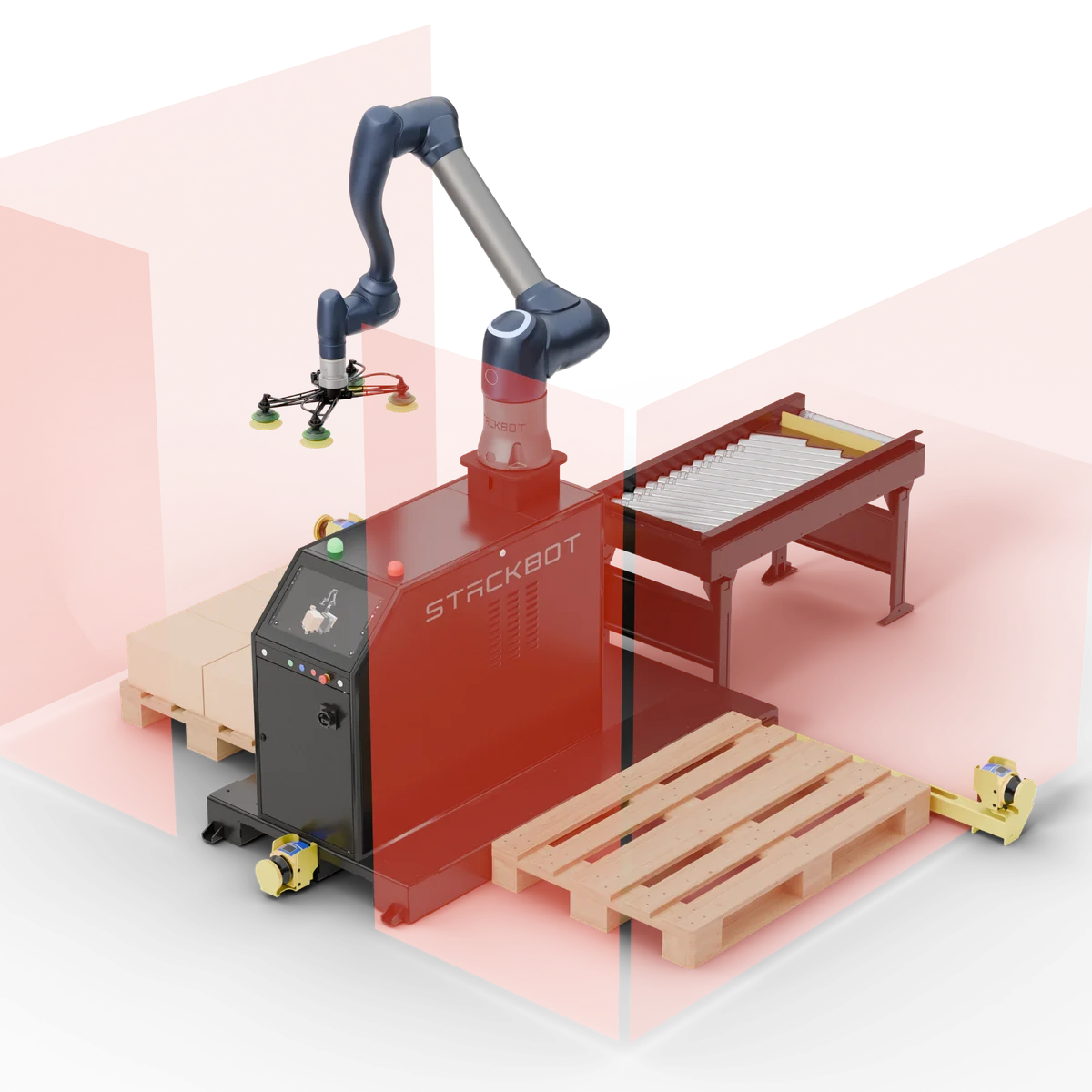
The CORE and PRO versions differ mainly in the StackGuard safety package. The right version is established from the application, the layout, and the operational requirements. Talk to the Novomatix team for the correct selection.
Novomatix does not treat palletizing as an equipment sale. The approach starts from the real process — the product type, the line rhythm, the infeed method, and the operational objectives — and follows through to a correct implementation under the real conditions of the plant or the warehouse.
We understand the process, the product type, the rhythm, and the layout constraints before making any technical recommendation.
We recommend the right Stackbot version — CORE or PRO, SB20 or SB30 — on the basis of the specific application.
We define the infeed point, the placement pattern, and the link to the pallet removal flow, for the real rhythm of the line.
We stay with the project from the first configuration through to a stable cycle. That includes tuning, adaptation, and operational assistance.
Stackbot is a Plug & Play automated palletizing system designed for end-of-line and production areas. It includes the robot arm, the StackFeeder, an HMI with no-code software, and every component needed for complete, safe palletizing.
It suits production lines with a steady rhythm, packaging and dispatch areas, and anywhere manual palletizing consumes resources, introduces variability, or forms an operational bottleneck. It handles boxes, crates, containers, and shrink-wrapped packs.
Under standard conditions, Stackbot can be operational in approximately 60 minutes from delivery: unpacking, positioning, connecting the utilities, configuring the pattern, and the first palletizing run — all on the same day.
No major changes are needed. Stackbot is designed to fit onto existing lines — it requires no foundation, no anchoring, and no special installation work. It is positioned with a forklift or a pallet truck and connected to the existing utilities.
Yes. The palletizing software is no-code and is operated directly from the 15.6" HMI. Configuring a new palletizing pattern requires no programming and can be done by the line operator.
Yes. The Stackbot platform is mobile and can be moved between lines with a forklift or a pallet truck. That flexibility allows the system to be used at several points in the plant or the warehouse.
Stackbot is not the right fit when the palletizing volume is too low to justify automation, when products exceed the maximum payload of the system (20 or 30 kg depending on the version), or when product and packaging variability is so high that constantly changing the pattern would cancel out the operational gain. If manual palletizing is not yet a real bottleneck in your process, the investment is not a priority.
Talk to the Novomatix team and identify the Stackbot version that fits your application — no obligation, focused on the process and on the business case for it.
Talk to a specialistWe start with your process and work out which approach makes sense.
Talk to a specialistWhat are you interested in?